

Most garage floors fail long before homeowners think they should.
Not because the concrete was bad.
Not because the installer didn’t show up.
Usually because the chemistry itself was wrong for the environment.
The majority of homeowners shopping for a garage floor coating are quoted some version of an epoxy system without ever being told there are better alternatives available today. That’s not because epoxy is the best option. It’s because epoxy is cheaper, easier to sell, and has been marketed heavily for years.
At Sullivan’s Concrete Coatings, we made the decision a long time ago to stop installing epoxy on finished residential floors altogether.
Here’s why.
The Real Problem With Epoxy Isn’t Day One — It’s Year Three
Fresh epoxy looks great. That’s why so many homeowners believe it’s a premium solution.
The problem is what happens after repeated exposure to:
- Hot tires
- Moisture vapor
- Freeze-thaw cycles
- UV exposure
- Chemical spills
- Daily abrasion
Over time, traditional epoxy systems become brittle. They lose flexibility. They begin separating from the concrete substrate. That’s when you start seeing:
- Peeling
- Chipping
- Delamination
- Yellowing
- Tire lift
- Surface cracking
Most homeowners assume this is “normal wear.” It isn’t.
It’s chemistry.
Epoxy Was Never Designed for Modern Residential Use
Traditional epoxy coatings were originally developed for controlled industrial environments — not residential garages that deal with dramatic temperature swings, vehicle traffic, and moisture movement through concrete slabs.
Concrete naturally expands, contracts, and transfers moisture over time. Epoxy has very limited flexibility, meaning it struggles to move with the slab underneath it.
That rigidity becomes the failure point.
Once the bond weakens, failure spreads quickly.
Why Polyaspartic Systems Perform Differently
Polyaspartic coatings were engineered to solve many of epoxy’s long-term weaknesses.
Unlike epoxy, polyaspartic systems remain flexible enough to handle concrete movement while still delivering extreme surface durability.
The result is a floor that resists:
- Hot tire transfer
- UV fading
- Moisture intrusion
- Abrasion
- Chemical staining
- Impact damage
More importantly, the coating maintains adhesion to the concrete far more effectively over time.
That’s the difference homeowners actually feel years later.
UV Resistance Changes Everything
One of the biggest visible failures in epoxy flooring is yellowing.
Sunlight breaks epoxy down faster than most people realize. Garages with windows, open doors, or exterior exposure often begin discoloring within a relatively short period of time.
Polyaspartic coatings are UV stable.
That means the finish keeps its color, gloss, and appearance significantly longer — especially in residential environments where aesthetics matter.
Faster Cure Time Means Better Results
Epoxy systems often require multiple days of cure time, leaving the floor vulnerable during installation.
Polyaspartic systems cure rapidly and allow our crews to complete most residential garage floors in a single day.
That faster cure time also reduces contamination risks from dust, humidity, debris, and airborne moisture during installation.
Less downtime. Better performance.
The Cheapest Floor Is Usually the Most Expensive Later
Many homeowners compare coatings based only on upfront price.
But replacing a failed floor coating is significantly more expensive than installing the right system the first time.
Removing failed epoxy is labor-intensive, messy, and costly because the damaged coating must be mechanically ground off before a new system can be installed properly.
That’s why we don’t build our projects around “temporary” solutions.
We build them around long-term performance.
Why Sullivan’s Concrete Coatings Refuses to Install Epoxy
This decision wasn’t based on trends.
It came from seeing too many failed floors.
We’ve seen peeling coatings installed only a few years earlier. We’ve seen homeowners forced to pay twice because the original system couldn’t handle real-world conditions.
So we made a simple decision:
If we wouldn’t install it in our own home, we won’t install it in yours.
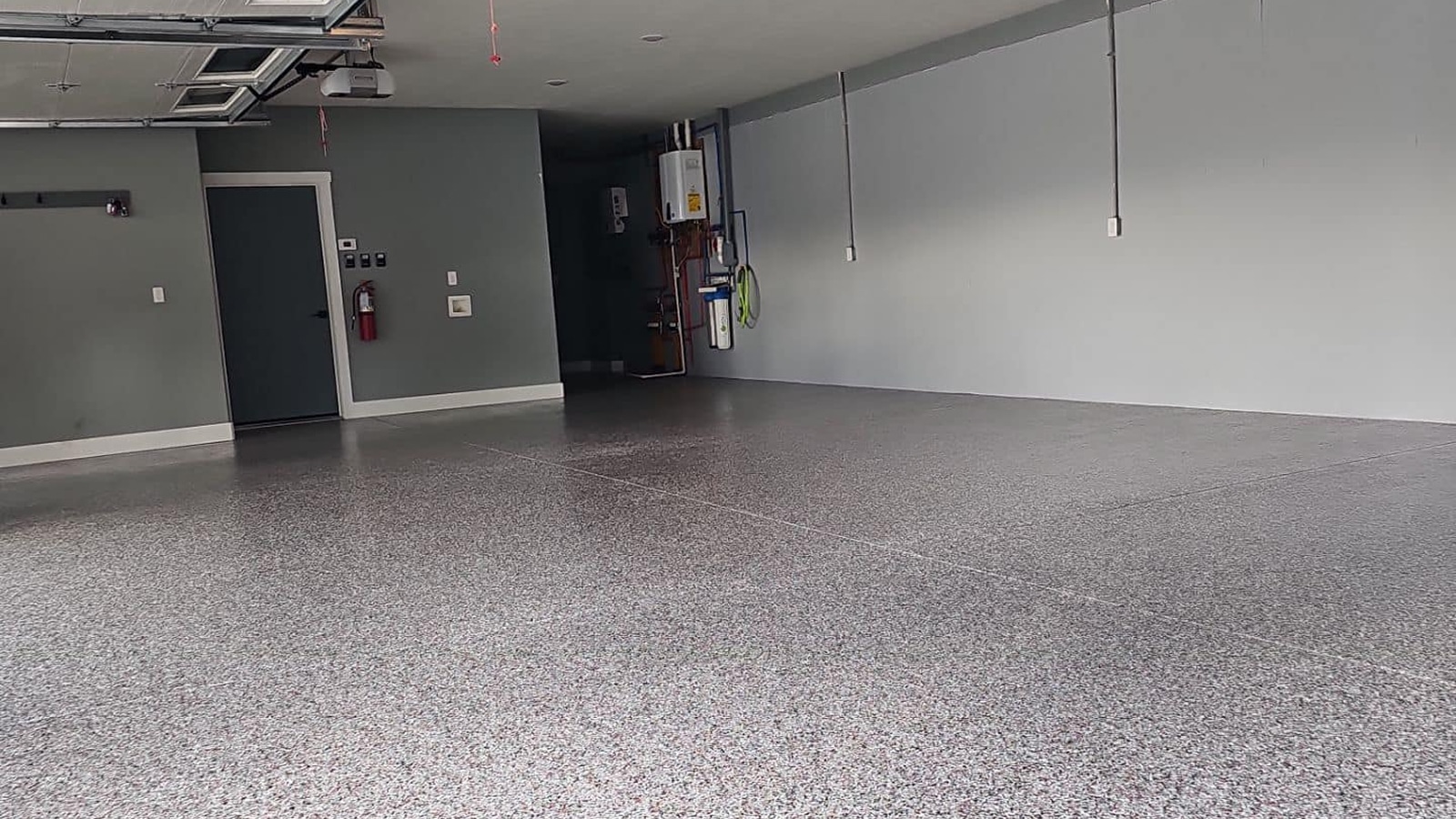
That’s why our coating systems are built around industrial-grade polyurea and polyaspartic technology engineered for durability, adhesion, and long-term residential performance.
Because the chemistry matters more than the sales pitch.
And in flooring, chemistry is what decides whether your floor still looks great five years from now — or starts failing after the second summer.